

Your Relationship With Money — And Why It Shapes Every Financial Decision You Make
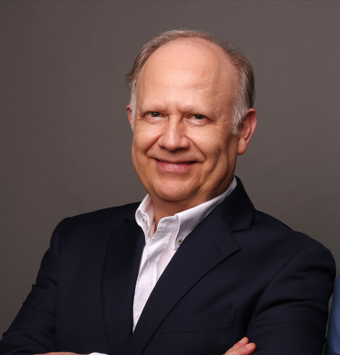

By Rodrigo Rincón
Mar 17, 2026Good financial decisions require two things in equal measure: technical knowledge and emotional self-awareness. Most people focus only on the first. Rodrigo Rincón explains why the second one determines the outcome — and what to do about it.
There is no school that teaches you how to manage the emotional side of financial decisions. There is no course, no certification, no shortcut.
Rodrigo Rincón says this directly in Wealth and Family: technical knowledge can be acquired through study and experience. But identifying and working through the emotional influences on your financial decisions — that requires daily effort and a genuine desire to know yourself better.
Most financial losses are not caused by lack of information. They are caused by something much more personal: greed that silences the alarm bells, fear that paralyzes when action is needed, arrogance that assumes success is guaranteed, or envy that hands control of your decisions to someone else's life.
Understanding your own relationship with money is not an abstract concept. It is the foundation on which every financial decision is built.
The Capital Sins of an Investor
In Wealth and Family, Rodrigo describes what he calls the capital sins of an investor — the emotional and character patterns that can neutralize any advantage a person has in technical knowledge. These are not personality flaws. They are human tendencies that every investor faces, in different combinations and at different moments.
Recognizing them in yourself is the first step toward making better decisions.
Greed
Rodrigo defines greed not as the desire to have more — that is natural — but as whatever clouds your reason, makes you forget to analyze the alternatives in front of you coldly, or causes you to ignore the results of your own analysis because they say something different from what you wanted to hear.
When greed enters, you stop asking what could go wrong. You enter a state comparable, as Rodrigo writes, to running back into a burning house because you left your wallet inside. The sense of alert that should be on — asking what could go wrong — gets switched off, consciously or not, instantly.
The clearest signal: someone promises you a return well above market rates, and instead of asking how that is possible, you start imagining what you will do with the money. That is greed at work. When you hear "guaranteed return," Rodrigo is direct in Wealth and Family: turn on the alarms immediately. Better yet, run!
Fear
Fear, Rodrigo notes, is actually a good ally when studying an investment opportunity. He recommends keeping your distance from anyone who feels no fear when making decisions about their wealth — or yours.
The problem is when fear paralyzes. When you see opportunity clearly but cannot bring yourself to act. When you spend years reading, researching, preparing — and never actually start. As Rodrigo writes: it is like learning to swim by watching videos, buying the equipment, and talking to instructors — but never getting in the water.
Fear also distorts timing. It can delay entry into a good opportunity, and then, after watching others make money, push you to finally enter precisely when it would be more prudent to exit.
Arrogance
Arrogance is, in Rodrigo's words, as harmful as it is misunderstood — which makes it especially dangerous. It appears when someone acts, consciously or not, as if their wealth were eternal, as if it had a life independent of the quality of the decisions being made with it.
No wealth is immune to the impact of bad decisions. Without exception. Wealth itself offers no protection — only the quality of the thinking that guides it.
Arrogance is equally dangerous in advisors. The person who presents themselves with certainty, as if they cannot be wrong, as if "you do not know and I do" — that attitude can hide both incompetence and, in worse cases, the intention to deceive.
Ignorance
The most important form of ignorance, Rodrigo writes, is not the lack of technical financial knowledge. It is the lack of self-knowledge.
The questions that matter most are not about markets or asset classes. They are personal:
- What level of risk are you truly willing to take without losing your peace of mind?
- In a bad scenario, which of your goals are non-negotiable?
- How do you actually behave under panic or euphoria — not how you think you would behave?
- Do you make decisions on your own timing and with relevant information, or do you decide on impulse or under the pressure of others?
These questions are uncomfortable precisely because most people have never answered them honestly. The investor who does not know themselves is vulnerable to every one of the other sins on this list.
Envy
Envy is one of the most common and most human feelings, and one of the most damaging to financial decisions. The envy of someone else's success — or worse, their potential future success — disperses your attention, your time, and your capital.
In practical terms, envy means ceding control of your decisions to the direction someone else's life is taking. You stop making decisions based on your situation, your goals, and your criteria — and start making them based on what someone else appears to have or to be doing.
The investor who acts from envy is not investing. They are reacting.
Innocence — The Trap of Wishful Thinking
Rodrigo dedicates particular attention in Wealth and Family to what he calls innocence — what might also be called wishful thinking. It appears when you are already invested in something and begin unconsciously ignoring new information that contradicts the assumptions you used to make the decision.
Being invested means being emotionally committed — not just with your money, but with your perception of how smart you are, the time and analysis you put in, and your image in front of others who know about the decision.
This is particularly dangerous when you are deeply committed to a single investment. Any person in that situation becomes highly prone to judgment errors — especially ignoring new data that contradicts the original thesis. As Rodrigo writes in Wealth and Family, it is wishful thinking to assume that an investment will succeed simply because you have put in the time, because you deserve a good outcome, or because things have always worked out for you before.
What This Has to Do With You
You may read these descriptions and feel that they apply to other people — to reckless investors or inexperienced ones. That would be a natural reaction.
But Rodrigo makes an important observation in Wealth and Family: being smart in one field or profession does not mean being equally prepared in another. The most capable, successful people he worked with across more than 25 years in finance were not immune to these patterns. In many cases, confidence in their own judgment — earned legitimately in their field — made them more vulnerable to greed, arrogance, and innocence, not less.
Developing your relationship with money doesn't mean eliminating these tendencies. It means learning to recognize when they show up and having a process in place that keeps them from making decisions for you.
The Role of a Thinking Space
Rodrigo describes in Wealth and Family the value of having someone who helps you hold on to expectations grounded in reality — not in what you wish were true, but in what the evidence supports.
Most people do not have that. They have family members who are emotionally invested in their decisions, friends whose incentives are not perfectly aligned, and advisors who earn money from what they recommend.
What they rarely have is a space where the only goal is honest, structured thinking about their own situation — without pressure, without hidden incentives, without the need to protect anyone's feelings or interests.
That is what Ona was built to provide. The money you worked hard to earn deserves to be protected not just with good financial decisions, but with clear thinking about the emotional forces that shape them.
Frequently Asked Questions
Why do emotions affect financial decisions so much?
Because financial decisions involve uncertainty, significant stakes, and time horizons long enough that the results are not immediate. In that environment, our instincts — evolved for short-term survival, not long-term wealth building — tend to work against us. As Rodrigo Rincón explains in Wealth and Family, both technical knowledge and emotional self-awareness are necessary for sound financial decisions over time. One without the other is not enough.
What is the most dangerous emotional pattern for investors?
Rodrigo identifies several, but the combination of greed and innocence is particularly damaging — greed that silences the alarm bells when something looks too good to be true, and innocence that keeps you committed to a bad decision because admitting it was wrong feels too costly. Together, they can cause someone to stay in a losing position far longer than the evidence justifies.
How do I know if fear is keeping me from making good financial decisions?
The clearest sign is a pattern of analyzing, preparing, and researching — but never actually committing to a decision. If you have postponed the same financial decision repeatedly despite having enough information to act, fear may be the actual obstacle. The solution Rodrigo describes is developing a clear plan when your thinking is cold and objective, so that when the emotional moment arrives, you have something to follow rather than something to invent.
Is it possible to be too confident as an investor?
Yes — and the higher your success in another field, the more vigilant you need to be. Rodrigo observed consistently across more than 25 years that successful entrepreneurs and professionals sometimes extrapolated their confidence from their area of expertise into financial markets or investments where the rules are different. Recognizing that being smart in one field does not automatically make you skilled in another is one of the most protective things an investor can internalize.
How does Ona help with the emotional side of financial decisions?
Ona provides a space to think through financial decisions without pressure, without hidden incentives, and without anyone benefiting from the outcome. It uses the same approach and principles applied in family offices — an approach that surfaces the right questions, identifies blind spots, and helps you separate what you feel from what the evidence actually suggests. Try Ona free for 3 days at onawealthmentor.com.
Rodrigo Rincón is founder of FOA Family Office Advisors, author of Wealth and Family*, and co-creator of Ona Wealth Mentor. With 25+ years in finance and family office leadership, he built Ona to make conflict-free financial thinking accessible to everyone. Connect with Rodrigo on LinkedIn.*