

How to Make Better Financial Decisions: A Framework That Actually Works
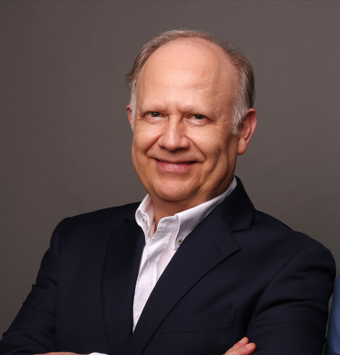

By Rodrigo Rincón
Mar 17, 2026Making better financial decisions does not require predicting markets or having more information. It requires a structured process — one that separates good thinking from impulse, pressure, and noise. This is the framework Rodrigo Rincón developed across 25 years in finance and family office leadership.
Most people approach financial decisions the way they approach most big choices in life: they gather some information, talk to a few people, weigh their options, and then decide — often under time pressure, often influenced by whoever is in the room.
This works reasonably well for many decisions. For financial ones, it tends to fail.
Not because the people making them are careless. But because financial decisions have a specific set of characteristics that make informal, intuitive thinking dangerous: the stakes are high, the information is asymmetric, the person advising you often has incentives you don't fully understand, and the results only reveal themselves years later — long after the moment when you could have changed course.
In Wealth and Family, Rodrigo Rincón describes what separates families that preserve and grow their wealth across generations from those that don't. The answer is rarely about which investments they chose. It is almost always about how they made decisions.
The Problem with How Most People Decide
There are two extremes Rodrigo identifies in financial decision-making, and most people fall into one of them.
The first is what he calls the Hollywood approach — chasing the big win. Decisions made on instinct, on excitement, on the promise of outsized returns. No formal process, no written criteria, no structured analysis. The gain feels almost certain. The risk is barely considered.
The second is paralysis — so much information, so many conflicting opinions, that no decision gets made at all. Or a decision gets made by default, which is its own kind of choice.
Both approaches have the same root problem: they are reactive. They respond to whatever is in front of you rather than to a framework you built when your thinking was clear.
A structured process fixes this — not by removing uncertainty, but by ensuring that your decisions are made with your head clear, your criteria defined, and your interests protected.
The Rodrigo Rincón Framework: Three Moments of Every Financial Decision
In Wealth and Family, Rodrigo describes a disciplined approach to financial decisions built around three moments. This framework was developed inside family offices — where the cost of a bad decision is generational, not just personal.
Before You Decide
This is the most neglected stage. Most people skip it entirely.
Before committing to any significant financial decision, Rodrigo recommends having clear answers to three questions:
What is your investment policy? In other words — what are the boundaries you have set for yourself as an investor? Which types of assets fit your risk profile? What do you need in terms of liquidity? What are your short and long-term objectives? A written investment policy is not bureaucracy. It is your protection against the pressure, excitement, and fear that will show up during the decision itself. As Rodrigo writes in Wealth and Family: investing without a policy is like navigating without a map. You may arrive somewhere — but the odds work against you.
What are your evaluation criteria? Before studying any specific opportunity, define the minimum elements you will require to move forward. What questions must be answered? What risks must be understood? What terms would make this not worth your time? Having these criteria written down before you see the proposal protects you from the very human tendency to adjust your standards once you are already emotionally invested in an option.
Who benefits from this decision besides you? Every financial decision involves other parties — advisors, banks, sellers, partners. Understanding how each of them is compensated, and how that compensation aligns or conflicts with your interest, is not cynicism. It is basic financial hygiene.
While You Decide
The greatest risk during the decision itself is pressure — the pressure to decide faster than you should, to please the person proposing the opportunity, to not appear indecisive.
Rodrigo is direct about this in Wealth and Family: the goal of a good decision process is not to approve what is on the table. It is to create an environment of genuine analysis — one that leads to whatever conclusion the evidence actually supports, regardless of who brought the opportunity to you.
This means resisting the urgency that almost always accompanies financial proposals. A good opportunity does not disappear because you took two weeks to think carefully. If someone is pressing you to decide before you are ready, that pressure itself is a signal worth paying attention to.
After You Decide
Most people stop thinking about a decision the moment they make it. This is a mistake.
Rodrigo recommends establishing, at the time of the decision, how you will measure whether it was a good one — not just whether it produced a gain, but whether the gain was proportionate to the risk you took. As he explains in Wealth and Family: a profitable investment that returned no more than leaving your money in the bank was not a good decision. The return must justify the risk.
Building this evaluation into the decision from the start — rather than rationalizing outcomes after the fact — is what separates disciplined investors from lucky ones.
The One Question That Changes Everything
Across 25 years in finance, Rodrigo has found that one question, asked honestly before any major financial decision, catches most mistakes before they happen:
Is this a good deal — or is this a good deal for me, specifically, given my situation?
The distinction matters more than it seems. An investment can be objectively sound and still be wrong for you — because of your liquidity needs, your risk tolerance, your time horizon, or your existing portfolio concentration.
Family offices are built around this question. They do not evaluate opportunities in the abstract. They evaluate them in the context of the specific person or family they serve. This is the thinking Ona brings to everyone.
Frequently Asked Questions
What is a financial decision framework?
A financial decision framework is a structured process for evaluating financial choices before making them. It typically includes defining your investment criteria in advance, understanding the incentives of everyone involved, resisting time pressure, and establishing how you will measure whether the decision was good — not just whether it produced a gain. The goal is to make decisions from a position of clarity rather than emotion, pressure, or incomplete information.
How do I know if a financial decision is right for me?
The key question, as Rodrigo Rincón explains in Wealth and Family, is not whether the opportunity is objectively good — but whether it is good for you specifically. That means evaluating it against your liquidity needs, risk tolerance, time horizon, and existing assets. An investment that makes sense for someone else may be wrong for your situation. A structured process helps you answer this question before you commit.
What is an investment policy and do I need one?
An investment policy is a written set of criteria that defines what types of investments fit your financial profile — including risk level, liquidity requirements, asset types, and objectives. Rodrigo recommends having one before evaluating any specific opportunity. Without it, your standards tend to shift under the influence of whoever is presenting the proposal. With it, you have a reference point that does not change based on how exciting the opportunity looks in the moment.
What does it mean that financial information is asymmetric?
It means that the person offering you an investment or financial product almost always knows more about it than you do. They know the risks, the fine print, the margins, and who else benefits from the transaction. You, as the buyer or investor, are working with less information — and often do not know what you do not know. This imbalance is not accidental. It is built into how most financial products are sold. A structured process helps compensate for it: by requiring that your questions get answered before you commit, and by asking who else benefits from the deal besides you.
Why do financial decisions often go wrong even with good intentions?
Usually because of three factors: pressure to decide faster than the situation requires, incentives that favor whoever is inviting you to invest rather than you, and the absence of a structured process to filter decisions. Good intentions are not enough when the information is asymmetric and the money involved took real effort to earn. A process protects you in ways that good intentions cannot.
How is Ona different from just thinking through a decision on my own?
Ona provides the structured thinking framework that most people have never been taught — the same methodology used in family offices to evaluate decisions before they are made. It helps you ask the right questions, identify blind spots, and think through the full consequences of a financial choice. It has no products to sell, no commissions to earn, and no interest in which decision you make — only in helping you make it with more clarity. Try Ona free for 3 days at onawealthmentor.com.
Rodrigo Rincón is founder of FOA Family Office Advisors, author of Wealth and Family*, and co-creator of Ona Wealth Mentor. With 25+ years advising families and professionals on wealth strategy, he built Ona to make conflict-free financial thinking accessible to everyone. Connect with Rodrigo on LinkedIn.*