

Why Most People Make Financial Mistakes — And It Has Nothing to Do With Intelligence
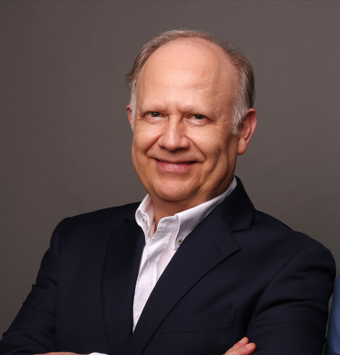

By Rodrigo Rincón
Mar 17, 2026Most financial mistakes don't happen because people are careless or uninformed. They happen because the people giving advice have incentives that don't align with yours — and nobody talks about it.
There is a question Rodrigo Rincón has asked throughout his career in finance, and he poses it directly in his book Wealth and Family:
"Have you ever asked yourself what the incentives are of the people who help you make decisions about your wealth?"
Most people haven't. And that silence — that unasked question — is where financial loss usually begins.
The Real Reason Financial Decisions Go Wrong
It is easy to assume that bad financial decisions come from ignorance. But that is rarely the full story.
People lose money because they invested in something a friend recommended — without understanding it. Because they bought a product a bank advisor suggested — without knowing the advisor had a sales target to meet. Because they followed a financial influencer — without knowing how that person gets paid.
The problem is not lack of intelligence. The problem is structural.
In Wealth and Family, Rodrigo describes a consistent pattern: those who advise on wealth often have incentives that run parallel to yours — or directly against them. A commission-based advisor will always have an incentive to sell you more products or manage more of your money. A bank recommends its own vehicles. An influencer may be compensated by the brands they promote.
None of this is necessarily dishonest. But it creates a gap between the advice you receive and the advice that would be best for you. And most people never see that gap — because nobody points it out.
The Silence That Costs the Most
Money is one of the few topics most people never discuss openly — not with friends, not with family, and often not even with themselves.
That silence has real consequences. When people don't talk about money, they don't ask the right questions. They don't challenge the advice they receive. They don't learn what others have learned the hard way.
Rodrigo observed this pattern across years of working with families. People with great capacity made painful financial decisions — not because they lacked the ability to understand, but because they never had someone in their corner whose only incentive was their wellbeing.
The families that preserved and grew their wealth across generations shared one characteristic: they had access to structured, conflict-free thinking. They had people around them who asked the uncomfortable questions, who looked at the full picture, who had no reason to recommend anything other than what was genuinely best.
That access has usually been limited to a small group — those with the resources to engage family offices and private wealth advisors working under fiduciary terms.
For everyone else, the default has been to navigate alone, or to rely on service providers with hidden incentives.
What Breaking the Silence Actually Means
Breaking the silence around money is not about broadcasting your finances or having awkward conversations at dinner.
It means asking the question Rodrigo poses in his book: what are the incentives of the people advising me?
It means allowing yourself to face your wealth honestly and completely — without fear and without pressure to act.
It means having a space where you can ask the questions you've been afraid to ask. Where no one is trying to sell you anything. Where the only goal is clarity.
That kind of space is rare. Most financial tools and services exist to capture your assets, manage your money, or sell you products. Very few exist simply to help you think.
Why Ona Was Built
Ona Wealth Mentor was created to be that space.
It does not sell financial products. It does not earn commissions. It does not benefit from your decisions. It has no interest in managing your money — only in helping you understand it.
It is built on the same frameworks Rodrigo developed across 25 years in finance and family office leadership — frameworks designed to ask the right questions, surface the right risks, and help you think before you act.
The goal is not to make decisions for you. It is to give you the clarity to make better ones yourself. The money you worked so hard to earn deserves to be understood. Ona helps you do it.
Frequently Asked Questions
How do I know if my financial advisor has a conflict of interest?
The clearest signal is understanding how they get paid. As Rodrigo Rincón explains in Wealth and Family, the right question to ask any advisor is: "In how many ways do you earn money from this relationship?" A commission-based advisor earns more when you buy certain products. A bank recommends its own vehicles. An independent advisor who charges only fees — with no ties to banks, funds, or product distributors — is the closest thing to a fiduciary relationship. If the answer to that question is vague or uncomfortable, that discomfort is worth paying attention to.
What is a fiduciary advisor and why does it matter?
A fiduciary advisor is one whose only obligation is to act in your interest — with no financial incentive to recommend one product over another. In Wealth and Family, Rodrigo uses a clear analogy: a commission-based advisor is like a baker who only sells bread. They will solve every problem with bread, because that is how they earn their living. A fiduciary is like an independent nutritionist — they design what is right for you, with no commitments to whoever sells the bread, the fruit, or the fish. Most people never have access to that kind of advisor. That is what Ona is built to provide.
What does it mean that financial information is asymmetric?
It means that whoever is offering you a financial product or investment almost always knows more about it than you do. They know the risks, the fine print, the margins, and who else benefits from the transaction. You, as the buyer, are working with less information — and often don't know what you don't know. This imbalance is not accidental. It is built into how most financial products are sold. The right response is to require that your questions get answered before you commit — and to always ask who else benefits from the deal besides you.
Why do people with great capacity make bad financial decisions?
Rarely because of ignorance. More often because they are making decisions under pressure, under the influence of someone whose incentives don't align with theirs, or without a structured process to evaluate what they are being offered. Rodrigo observed this pattern consistently across 25 years in finance. Having a structured, conflict-free thinking process changes the outcome — not by predicting markets, but by shifting the odds in your favor.
Why do most people never ask about their advisor's incentives?
Partly because it feels uncomfortable — like you are accusing someone of dishonesty. But more often because nobody ever told them to ask. Most people assume that a professional in a position of trust is automatically working in their interest. That assumption is understandable, but it is not always warranted. The financial system is built around products that generate revenue for someone. Understanding who that someone is — and whether their interests align with yours — is not cynicism. It is the most basic form of financial self-protection.
What is the difference between a financial mentor and a financial advisor?
A licensed financial advisor can manage your money and make specific product recommendations — and in most jurisdictions, is regulated to do so. A financial mentor does not manage your money or recommend specific products. Instead, they help you think more clearly about your situation, ask better questions, and make better decisions on your own. Ona is a financial mentor. It has no products to sell, no commissions to earn, and no incentive to push you in any direction. The goal is simply clearer thinking.
Rodrigo Rincón is founder of FOA Family Office Advisors, author of Wealth and Family*, and co-creator of Ona Wealth Mentor. With 25+ years advising families and professionals on wealth strategy, he built Ona to make conflict-free financial thinking accessible to everyone. Connect with Rodrigo on LinkedIn.*